The Logistics of Light: Photovoltaic Installations in Haiti
In Haiti, energy isn’t a luxury—it’s the pulse of survival. If you are reading this in Port-au-Prince or the provinces, you know the sound of the “delco” (generator) cranking up at sunset and the smell of diesel exhaust that follows. But with the national grid (EDH) providing as little as 3 hours of power a day in many zones, and fuel prices at the mercy of roadblocks and port delays, photovoltaic installations in Haiti have become the only logical way to secure 24/7 electricity.
Moving to solar isn’t just about putting glass on a roof. It’s about building a power plant that can handle the heat, the dust, and the wind of the Caribbean.
Why PV is Outperforming the Generator in 2026
For decades, the generator was the standard. In 2026, the math has shifted permanently. A 50kW diesel generator running 8 hours a day will consume roughly 43,800 liters of fuel a year. Between the fuel costs, the oil changes, and the mechanical repairs, you are essentially “renting” your power at a premium.
A solar PV installation is a one-time capital expense. Once the system is commissioned, your “fuel” is free for the next 25 years. Most commercial systems in Haiti now reach their break-even point (ROI) in less than 48 months.
The Financial Reality: Why Solar Beats the Generator
People often hesitate at the upfront cost, but look at the “hidden” bills you’re already paying:
- The Fuel Trap: No more lining up at the pump or paying black-market prices when the port is blocked.
- The Maintenance Drain: Generators are mechanical; they break, leak oil, and need filters. Solar has no moving parts.
- The ROI: For most Haitian businesses, a solar system pays for itself in fuel savings alone within 36 to 48 months. After that, your electricity is effectively free for the next two decades.
The Engineering Reality: What Actually Works in Haiti
The Haitian environment is harsh on electronics. If you buy a “plug-and-play” kit designed for a cool climate, it will fail here. A professional installation focuses on three specific technical pillars:
1. Battery Chemistry: Lithium is the Only Choice
In Haiti’s 35°C (95°F) heat, traditional Gel or Lead-Acid batteries are a liability. They lose efficiency quickly and often die within 18–24 months.
- The Solution: Lithium Iron Phosphate (LiFePO4). These batteries handle high temperatures, allow you to use 95% of the stored energy every night, and are warrantied for 10+ years.
2. Hurricane-Resistant Racking
Never trust weights or cinder blocks to hold your panels. We live in a hurricane zone where winds can exceed 150 mph.
- The Standard: Mounts must be through-bolted into structural concrete beams or heavy steel. Use only C5-rated corrosion-resistant hardware to survive the salty Caribbean air.
3. Thermal Management for Inverters
Inverters are the “brains” of your system. In Haiti, they often overheat, causing them to “throttle” (reduce) their power output.
- The Fix: Always install your inverter and battery bank in a dedicated, ventilated room with active cooling (fans) if necessary. Heat is the #1 killer of solar electronics.
Step-by-Step: Managing a Professional Installation
The Energy Diagnostic: Don’t guess. An engineer must measure your actual consumption. If you try to run an old, power-hungry AC unit on a small system, your batteries will be dead by 10 PM.
Sizing for Autonomy: We design for “grey days.” A good system should have enough battery storage to power your essentials for 2 days without a single hour of direct sunlight.
Surge Protection: Haiti is prone to intense lightning. Without dedicated DC and AC surge arrestors, a single strike can fry a $15,000 system in a millisecond.
Maintenance: The “Monthly Rinse” Rule
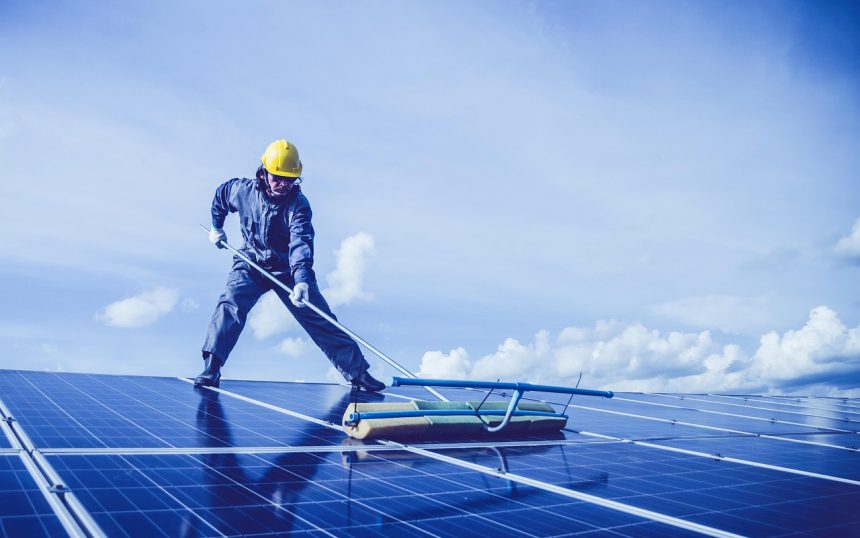
Because solar is silent, people often forget it needs care. Haiti is a dusty place. During the dry season, a layer of grey dust on your panels can block up to 20% of the sunlight.
- The Routine: Rinse panels with water and a soft cloth once a month. Never use a pressure washer; it can cause micro-cracks in the cells that eventually lead to “hot spots” and system failure.
Frequently Asked Questions
“Is solar really cheaper than my generator?”
A generator is a subscription to a fuel company that never ends. Solar is an investment in your own utility. After 4 years, your electricity is free.
“What happens during a hurricane?”
If your mounting is bolted to the structure, the panels stay put. While they won’t produce much power during the storm, you will have lights and internet the second the clouds clear.
“Can I run my whole business on it?”
Yes. From medical clinics to cold storage, businesses across Haiti are already 100% off-grid. It just requires professional engineering to size the load correctly.
Final Thoughts: Power Your Own Future
Transitioning to photovoltaic installations in Haiti is about sovereignty. It’s about knowing the lights will stay on when the sun goes down, regardless of fuel shortages or grid failures. The technology is here, and it is more resilient than ever.